
Every family has people in it who did things that are hard to look at directly. These are mine.
Each portrait below links to a full conversation — a record of what I found in the historical archives, and what happened when I sat down and asked them to explain themselves. Some of the answers surprised me. None of them let me off the hook.

Steve's third-great grandfather, Charles was a Texas lawyer, judge, Union soldier — and enslaver, slave trader, and Adjutant General of the Knights of the Golden Circle, a secret society dedicated to preserving slavery. His many contradictions are at the center of Healing White History.
Charles Arden Russell
(1822–1878)

Charles's wife and Steve's third-great grandmother, Emeline raised their children in St. Mary's on the Bay, Texas, and outlived her husband, becoming the widow "Mrs. E.C. Russell" who kept the family together. Her Southern Baptist voice — and her silences — speak throughout the imagined conversation at the heart of the book.
Emeline Brightman Russell (1824–after 1878)
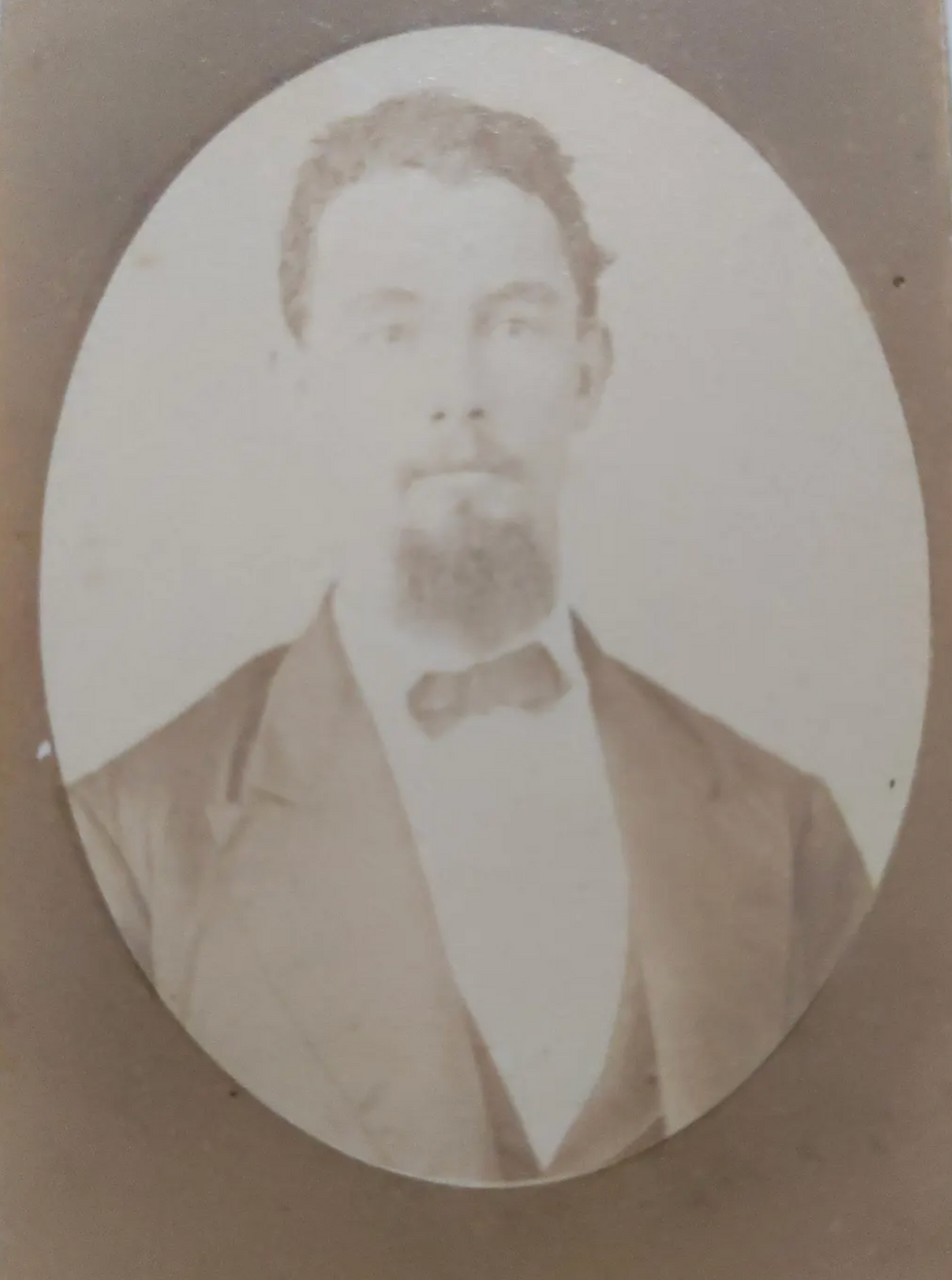
Charles and Emeline's son and Happy's great uncle, Lyman wore many hats across a long life — lawyer, judge, mayor of Comanche (twice), newspaper editor, banker, genealogist, and Sons of Confederate Veterans member. He wrote the canonical 12-page family biography of his father that both preserved and whitewashed the Russell legacy, making him one of the book's most important — and most complicated — witnesses.
Lyman Brightman Russell (1850–1940)

Steve's ninth-great granduncle, Young John was the Congregationalist minister who helped found Hadley, Massachusetts, and who secretly harbored William Goffe — one of the men who signed the death warrant of King Charles I of England — in his home for years. A Puritan patriarch who saw Native dispossession as God's will, he is the ancestor who most clearly connects the project's roots in colonial theology to the racial mythologies that followed.
Rev. John Russell, Jr. (1626–1692)

Born in Haarlem during the Dutch Golden Age, Abraham crossed the Atlantic as a young man and became one of New Amsterdam's most prominent early colonists — official miller for the Dutch West India Company, tavern keeper on Broadway, and a founding member of the first city council of what would become New York City. He leased farmland in what is now the Lower East Side of Manhattan under a charter that promised enslaved Africans as labor, and he lived through the colonial violence of Kieft's War against the Lenape people.
Abraham Pietersen van Deusen (c.1607–before 1678)

Happy's Aunt Alice spent more than 40 years as a teacher and principal in San Antonio — but she was also an active member of the United Daughters of the Confederacy, the organization most responsible for embedding the Lost Cause myth into American public life. Her detailed biography of Charles Arden Russell makes her one of the key archival keepers of a story that Healing White History sets out to reframe.
Alice Atkinson Neighbors (1889–1966)

Steve's grandmother and the person who first inspired this entire project, Happy was a Rice University graduate, a life master at bridge, a voracious reader, and a tireless keeper of family history — preserving the letters, photos, and genealogical records that gave Steve his first window into the ancestors in this book. Warm, playful, and beloved by everyone who knew her, she is the ancestor whose love made the reckoning possible.
Happy Wylie (Gladys Russell Atkinson Wylie, 1921–2001)
.png)
Happy's grandfather, Ned was a Union Army veteran who wandered from West Virginia to Texas after the Civil War, married Lyman's sister Nettie, and built a life as a lawyer and judge in South Texas. He believed himself unprejudiced — and his children believed it too — but in 1896 he helped organize the "White Man's Union" in Brazoria County, using armed intimidation to dismantle a Reconstruction-era biracial political coalition and suppress Black political participation for more than six decades.
Ned Atkinson (Edward Spear Atkinson, 1845–1916)

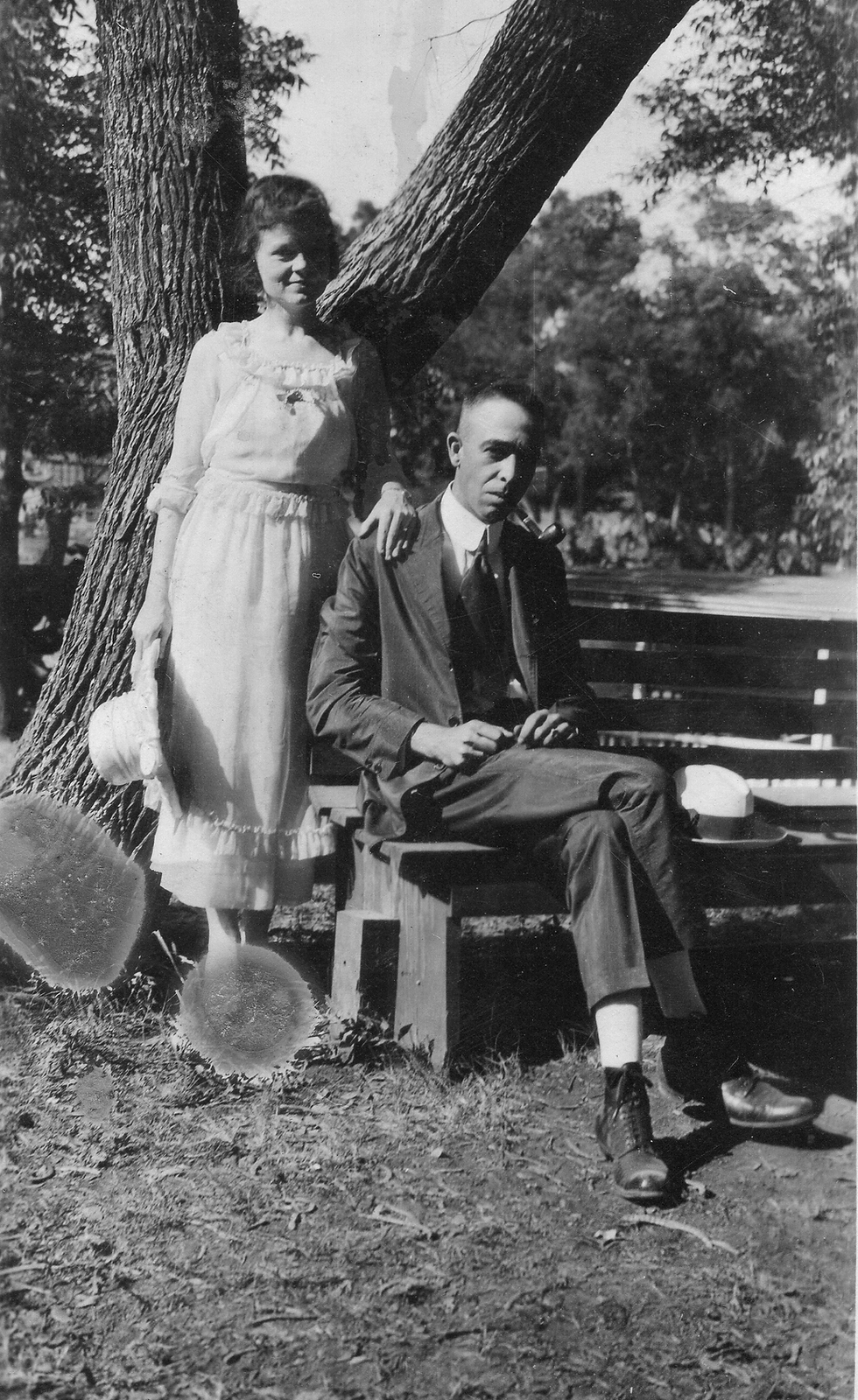
Happy's parents and Steve's great-grandparents, Rusty and Gladys were by all accounts devoted to each other and to their three daughters — warm, funny, and beloved by everyone who knew them. They were also, by their own family's account, consciously racist toward Black, Mexican-American, and Native American people, never questioning a worldview inherited from enslaving ancestors on both sides of the family tree, and embodying the central paradox that Healing White History examines: that "niceness" and white supremacy have always coexisted, and that one has never been a defense against the other.
Russell ("Rusty") Atkinson (1892–1978) and Gladys Hamilton Atkinson (1893–1980)

.png)

Most of us have ancestors we glorify.
.png)
The sharp lawyer.
The brave soldier.

The rugged pioneer.
But look closer. Through the lens of research, those stories shift.
The Confederate ancestor who
“just loved his heritage”
was actively defending slavery.
The “pioneer”
becomes a colonizer.
Now the clever businessman
is an enslaver who profited from stolen labor.
%20Ned%2C%20Hoffman%2C%20Gill%2C%20George_edited.png)
Healing White History is about traveling back — first in the historical record and eventually in imagined conversations, to learn who your ancestors truly were, and to face them.
To have the hard conversations about race your living family never had. To sit with those ancestors in their own time. To let them explain themselves. To hear the objections, the justifications, the certainties that made sense in 1858 and make considerably less sense now.

This is intense work on an intellectual, emotional, and spiritual level.
And then to deliver the rebuttal they never had to hear.
You don't excuse them.
You don't disown them.
You stay in the room —
and learn and heal from
and possibly with them.

The Slave Trader in My Family Tree
Everything changed when I read two sentences buried deep in an ancestor’s biography.
.png)
Confronting My Racist Ancestors: The Method
Guilt without specificity goes nowhere. Here's a better way.

Confronting Charly
My Puritan ancestors said they had 'no choice.' Here's what the record actually shows.
Substack
Not everything here is a conversation with an ancestor. Some essays are about history. Some are about the present. Some are about what it costs to look honestly at where you came from — and what it might be worth. All of them are part of the same project.

%20Ned%2C%20Hoffman%2C%20Gill%2C%20George.png)