top of page
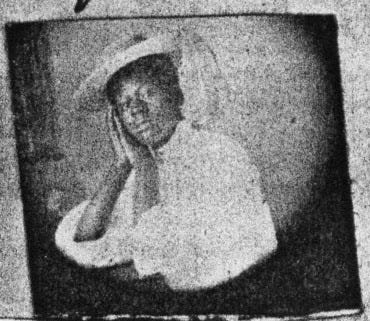
Bet Russell, St. Mary’s on the Bay, Texas, ca 1870s
On June 19, 1865, U.S. Army Major General Gordon Granger arrived in Galveston, Texas to spread the good news. Two hundred and forty-six years after the English privateer ship the White Lion landed at Hampton, Virginia with some “20 and odd” enslaved Africans, “[t]he people of Texas [were] informed that, in accordance with a Proclamation from the Executive of the United States, all slaves are free.” – General Orders, No. 3.
Today, we celebrate Juneteenth as a time of jubilation. And it certainly was. But it was much more than that. In 1865, about 250,000 enslaved people lived in Texas. The stories of their emancipation are mostly lost to us. But we know from first-hand accounts that those stories are about not only joy, but also uncertainty, loss, separation, and confusion.
One of those “mostly lost” emancipation stories belongs to a young woman named Airy, owned by my third-great grandparents, Charles and Emeline Russell. With the few facts I do have, I can imagine parts of the rest of Airy’s story – along with the story of her toddler daughter Bet.
On May 9, 1864, my great-great-great grandfather Charley sent the following letter to his wife Emeline, as he was on his way home from his duties as a Confederate soldier, where he had been stationed at “Camp Patterson”1 :
Dear Emeline:
I arrived at Mr. Morrison’s today about 10 o’clock, all well and not yet got wet. I have closed the trade for the negro girl and her children. She tells me she is only a field hand, but she is young, and you must learn her how to do house work. Have patience with her and I think she is a willing hand. Keep her busy at anything that comes handy until I return. She can work out the corn and garden if it needs any work. Learn her to milk and have patience! Adieu, C A Russell 2
According to the biography of Charley written by my grandmother Happy’s aunt, Alice Atkinson Neighbors, the name of the young Black mother that Charley bought from Morrison was Airy. Charley bought Airy and her two children – a toddler girl named Bet, and an infant son, who were with Emeline only a few days later, in mid-May 1864.3
Robert E. Lee surrendered on April 9, 1865 and the Union army captured Confederate president Jefferson Davis on May 10. I don’t know how long it took for news of the end of the war to make it to the Russell household, but I’d wager that Airy and her two young children continued to live with the Russell family until at least Juneteenth, when the Union army made its way to south Texas and announced emancipation.
The mystery is what happened when that announcement came. We know some facts: Airy left the Russell home, along with her infant son. But the toddler girl Bet stayed with the Russells for decades – until she had grown up and married Pleas Morris in 1886 – eight years after Charley’s death in 1878.
Why did Airy leave her toddler daughter with her former enslavers? The question haunts me. And I suspect it haunted Bet’s entire life.
Airy’s choice – if it was her choice – was heart-wrenching. She was leaving her enslaved life with no money, no land, no tools, and no family other than her children. She had not been allowed an education and could not read. How would she take care of her children? How would she take care of herself?
Accounts of emancipation from other freed men and women illuminate Airy’s dilemma.
Felix Haywood lived through that first Juneteenth in Texas:
Everybody went wild. We all felt like heroes and nobody had made us that way but ourselves. We was free. Just like that, we was free. … We knowed freedom was on us, but we didn’t know what was to come with it. … We thought we was goin’ to be richer than the white folks, ’cause we was stronger and knowed how to work, and the whites didn’t and they didn’t have us to work for them anymore. But it didn’t turn out that way. We soon found out that freedom could make folks proud but it didn’t make them rich.4
George Simmons, freed in Alabama, told an interviewer that the uncertainty of newly-freed existence led him to stay with his former master: “We didn’ know what to do and we didn’ know how to keep ourselves, and what was we to do to get food and a place to live? Dose was ha’d times, ’cause de country tore up and de business bad.”5
Hannah Plummer, freed in North Carolina, described her mother’s decision to leave their master despite the hardship:
When the war ended mother went to old marster and told him she was goin’ to leave. He told her she could not feed all her children, pay house rent, and buy wood, to stay on with him. Marster told father and mother they could have the house free and wood free, an’ he would help them feed the children, but mother said, “No, I am goin’ to leave. I have never been free and I am goin’ to try it.”6
Airy apparently made a different choice than Hannah’s mother. Or, possibly the Russells took that choice away from her.
White families kept Black children after Emancipation far more often than I had realized. Sometimes this happened without the consent of the children’s parents.
In Texas and other southern state legislatures after the Civil War, lawmakers created Black Codes that included provisions for “apprenticeships” for freed children working for their former owners.7 The law expressly permitted “masters” to inflict “moderate corporeal chastisement as shall be necessary and proper.” The law also provided that masters were permitted to pursue “runaways” and bring them back into the master’s service.8 In light of the law’s inclusion of the words “master” and “runaway,” and the express grant of power to the “master” over the body and freedom of the “apprentice,” little imagination is necessary to understand that this apprenticeship law was intended as a new version of racial slavery.
For tens of thousands of Black folks, the years following emancipation were wondrous. Given that freed men and women started with nothing after enslavement, what they managed to accomplish is breathtaking. They built communities, including Black schools, churches, and businesses. They owned land. They voted, won elections, and helped govern. And then came the backlash of white racial grievance. As Dr. W.E.B. DuBois described, “The slave went free, stood a brief moment in the sun, then moved back again toward slavery.”9
The Russell family and their descendants helped ensure that this moment in the sun was brief. Charley wrote a scathing poem called “The Scallawag,” venting his rage at the “Negro-loving,” “Ku Klux-fearing” white men who dared to support freed men and women. Charley and Emeline’s children and grandchildren would spread the false story of the Lost Cause of the Confederacy for decades. That story, in turn, would help launch the second coming of the Ku Klux Klan, and lay the groundwork for decades of Jim Crow segregation.
Which leads me to wonder whether the Black triumph during Reconstruction – however brief – applied to Airy at all. Did she have her own moment in the sun? Did she find love, prosperity, community?
And how did she handle her loss? Who made the decision to separate her from Bet? Did they ever see each other again?
I will never know the answer to most of these questions. But one way or another, I believe Airy’s loss stayed with her the rest of her days. Even if it was her choice, and even if it was the best choice available for everyone.
Bet’s story is another chapter, but we know that Emancipation left her without a mother. She grew up in a household where she always had a meal, clothing, and a roof over her head. She also lived as a “servant,” in a home where Black folks were considered less than fully human. And, true or not, I suspect that Bet lived believing that her mother had left her there.
For me, Airy’s story hits hard. My grandmother proudly told Bet’s story – how her great grandmother raised a Black child after the war with love, bucking racial stereotypes. That story has serious flaws. One of them is that it erases Airy.
As you celebrate Juneteenth this week, spend a few moments thinking about Airy and Bet.
Please subscribe to follow the arc: truth → healing → transformation & repair.
1 The reference to “Camp Patterson” comes from an earlier letter from Charley to Emeline, dated April 17th-18th, 1864. I’ve been unable to pinpoint with certainty where Camp Patterson was, although it was probably in or near the settlement of Patterson in Uvalde County in south central Texas. Neither Patterson nor Helena, where the Russells lived, exists today. But Google Maps tells me that the current distance is 143 miles by car from Uvalde, the county seat for Uvalde County, to Karnes City, near where Helena was. It was probably a similar distance by horse in 1864.
2 Papers of Charles Arden Russell, Briscoe Center for American History, University of Texas at Austin, at CAR 296-97.
3 Id. at CAR 296 (note from Charley’s son Lyman, stating that Airy joined them, “with Bet and a baby boy, whose name I have forgot”).
4 National Humanities Center Resource Toolbox, The Making of African-American Identity, vol 1 (1500-1865) , “Selections from the WPA interviews of formerly enslaved African Americans,” (1936-38) at 2 https://nationalhumanitiescenter.org/pds/maai/emancipation/text7/emancipationwpa.pdf (accessed June 15, 2026).
5 Id. at 5.
6 Id. at 3.
7 In 1866, the Texas Legislature passed the “General Apprentice Law.” Although it did not explicitly specify the race of “apprentices,” it was nonetheless a “Black Code” because it was enforced almost exclusively in the context of Black children working for white masters. See https://afrotexan.com/laws/black_codes.htm (describing enforcement of Black Codes); and https://afrotexan.com/laws/laws_5.htm#5 (General Apprentice Law). (both accessed July 24, 2025).
8 https://afrotexan.com/laws/laws_5.htm#5 (General Apprentice Law). (accessed July 24, 2025).
9 W.E.B. Du Bois, Black Reconstruction :An Essay Toward a History of the Part which Black Folk Played in the Attempt to Reconstruct Democracy in America, 1860–1880 (1935) Kindle ed. at 46.

bottom of page