top of page
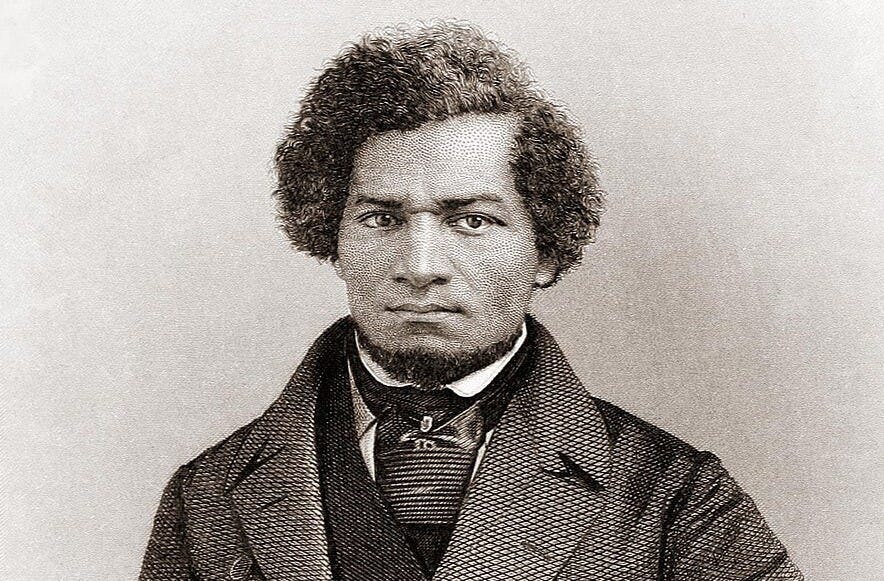
Frederick Douglass
“We hold these truths to be self-evident, that all men are created equal”
July 4, 1776
This weekend, across the nation, many Americans will celebrate the 250th anniversary of the signing of the Declaration of Independence. Family barbecues, fireworks, parades, and swimsuits will abound. Recent immigrants and those whose families have been here since the 17th century will celebrate freedom and opportunity. But for many, the day will instead (or also) inspire sober reflection, not unlike Frederick Douglass’ July 5 speech to the Rochester Ladies’ Anti-Slavery Society 174 years ago:
I am not included within the pale of this glorious anniversary! Your high independence only reveals the immeasurable distance between us. The blessings in which you, this day, rejoice, are not enjoyed in common. The rich inheritance of justice, liberty, prosperity and independence, bequeathed by your fathers, is shared by you, not by me. The sunlight that brought life and healing to you, has brought stripes and death to me. This Fourth July is yours, not mine. You may rejoice, I must mourn.1
Civil rights for Black and Indigenous people have come a long way since Douglass spoke in 1852. But the gaps in inheritance he described still persist. Mourning them remains a rational choice.
To illustrate, I’ll paraphrase (and update) author and activist Ijeoma Oluo 2 :
When more than 18% of Black Americans live below the poverty line, and the racial gap in poverty continues to expand, 3 I don’t feel like celebrating.
When Black households have one-tenth of the wealth of white households, 4 I don’t feel like celebrating.
When Black children make up 15% of our country’s youth population, but are detained at 5.6x the white rate and make up 46% of youth in criminal detention, 5 I don’t feel like celebrating.
When Native children are detained at 3.8x the white rate, 6 I don’t feel like celebrating.
When Black students are four times more likely than white students to be expelled or suspended from school, 7 I don’t feel like celebrating.
When Native American children have the highest rate of entry into the foster care system (more than three times the national average), 8 I don’t feel like celebrating.
All of these racial inequities are rooted in historical injustices: slavery, genocide and land displacement, redlining, and segregation (among others). Yet today, our legal system tells Black and brown members of society that all such problems have been solved. For example, according to our Supreme Court,
[T]he Voting Rights Act led to “great strides” in the ensuing decades: “voting tests were abolished, disparities in voter registration and turnout due to race were erased, and African-Americans attained political office in record numbers.” 9
And so our Supreme Court, like the Reconstruction-era Court of 1883, informs Black and brown folks that the law will no longer recognize past injustices against them. 10 Instead, the law will become “color blind.” Which is another way of saying that the Court will strike down any attempt to use racial remedies to correct past racial injustices.
I call this weaponized color blindness. It’s systematized white grievance, and its effect goes far beyond voting rights.
After getting the green light from the Supreme Court on voting rights, the Trump Administration has announced open season on unwinding any and all programs that seek to correct past racial harms. On June 16, for example, the Department of Justice intervened in the lawsuit Flinn v. City of Evanston , to challenge the racial reparations program created by the city of Evanston, Illinois to remedy past racial housing discrimination, claiming that it violates the Fourteenth Amendment’s Equal Protection Clause because it directs payments only to Black people. 11
According to Assistant U.S. Attorney General Harmeet K. Dhillon of the Justice Department’s Civil Rights Division, the reparations program is “Simply handing out money based on race. … It is race discrimination, pure and simple. And it is illegal.” 12 Similarly, Judicial Watch president Tom Fitton called the program a “blatantly unconstitutional reparations scheme” and a “woke, racist program.” 13
We need to review what’s happened here:
From 1919 to 1969, the city of Evanston, Illinois intentionally discriminated against Black people in area of housing, through passage of segregationist zoning ordinances, redlining, enforcement of restrictive racial covenants, and other racist policies.
In 2021, following study, the city issued a 77-page report documenting the harms from these racially discriminatory policies and practices. 14
The city passed a reparations program in response to the harms it caused, providing for payments of $25,000 each to the people harmed and their direct descendants. So far, Evanston has made this payment to about 200 people.
Now, based on a series of U.S. Supreme Court decisions claiming that the U.S. Constitution is “color blind,” white residents of Evanston have sued the city because the program only provides payments to Black people.
The United States Department of Justice has now intervened to support the plaintiffs, also claiming that Evanston’s reparations program is unconstitutional.
The Trump Administration’s position is shocking. Yet it’s also both completely on-brand for Trump, and a logical extension of the Supreme Court’s recent decisions on race. The government is complaining about paying Black people for harms done to them because they are Black. And ridiculous as that sounds, if the Constitution is truly “color blind” as the Supreme Court has now said, then this lawsuit may succeed.
While our nation celebrates its 250th anniversary even as white grievance shapes our politics, the rest of the world recognizes that reparations programs like those enacted in Evanston are critical to human rights, healing, and transformation. On June 20, just four days after the DOJ intervened in the Flinn case, a large group of African and Caribbean countries has called for a formal apology and reparations from countries that benefited from the transatlantic slave trade. 15 This decision followed a broader consensus reached in March 2026 by more than 123 countries at the United Nations, recognizing that transatlantic slavery was a “crime against humanity.” 16
This broad international consensus on reparations for racial harm should be no surprise. In 2005, the UN adopted a resolution titled “Basic Principles and Guidelines on the Right to a Remedy and Reparation for Victims of Gross Violations of International Human Rights Law and Serious Violations of International Humanitarian Law.” 17 And, while slavery may be a more obvious violation of international humanitarian law, intentional racial housing discrimination like that remedied by the Evanston program would also qualify.
So, this weekend, as the United States puts itself on a pedestal and champions its supposed exceptionalism, keep in mind this dichotomy: we are one of the few countries in the world that fails to support reparations for slavery and other racial harms. Instead, we claim that such reparations themselves are racist.
All of this would make perfect sense to my ancestors, who felt racially aggrieved for the rest of their lives after the Civil War. For them, after the Yankee army came in to run Texas during Reconstruction, and politicians granted Black people the right to vote and pursue their own paths, the world felt upside down. My third-great grandfather Charley Russell lost his county judge seat in 1866. His son wrote that “[d]uring these years, his health began to fail, and worry over his financial losses and over the general conditions during Reconstruction days contributed to his decline.” 18
In my ancestors’ minds, the world could only be righted if both the Yankees and Black folks went back to their “rightful place.” In such a mythical place, racial reparations would feel racist.
After writing about that, I don’t feel like celebrating.
Please subscribe to follow the arc: truth → healing → transformation & repair
1 https://loveman.sdsu.edu/docs/1852FrederickDouglass.pdf (accessed June 27, 2026).
2 Ijeoma Oluo, “I Don’t Feel Like Celebrating,” Medium (Jan. 10, 2019) https://medium.com/@IjeomaOluo/i-dont-feel-like-celebrating-8a80eb045116 (accessed June 27, 2026).
3 “The Racial Gap in Poverty Rates in the United States Is Expanding,” Journal of Blacks in Higher Education (October 6, 2025) https://jbhe.com/2025/10/the-racial-gap-in-poverty-rates-in-the-united-states-is-expanding/ (accessed June 27, 2026).
4 Briana Sullivan, Donald Hays, and Neil Bennett, “Households With a White, Non-Hispanic Householder Were Ten Times Wealthier Than Those With a Black Householder in 2021,” United States Census Bureau (April 23, 2024) https://www.census.gov/library/stories/2024/04/wealth-by-race.html (accessed June 27, 2026).
5 Joshua Rovner, Youth Justice By the Numbers,” The Sentencing Project (November 20, 2025) https://www.sentencingproject.org/policy-brief/youth-justice-by-the-numbers/ (accessed June 27, 2026).
6 Id.
7 Emily Peterson, “Racial Inequality in Public School Discipline for Black Students in the United States,” Ballard Brief (Fall 2021) https://ballardbrief.byu.edu/issue-briefs/racial-inequality-in-public-school-discipline-for-black-students-in-the-united-states (accessed June 27, 2026).
8 Annie E. Casey Foundation, “Child Welfare and Foster Care Statistics,” (November 2, 2025) https://www.aecf.org/blog/child-welfare-and-foster-care-statistics (accessed June 27, 2026).
9 Louisiana v. Callais , 608 U.S. __ (2026) (slip op. at 26) (quoting Shelby County v. Holder , 570 U. S. 529 at 549, 553 (2013)).
10 Civil Rights Cases , 109 U.S. 3, 25 (1883).
11 https://www.justice.gov/opa/pr/us-justice-department-moves-intervene-race-discrimination-lawsuit-challenging-reparations (accessed June 27, 2026).
12 Id.
13 https://www.judicialwatch.org/evanston-reparations-program/
14 https://www.cityofevanston.org/government/initiatives/evanston_local_reparations.php#collapselinks-150-30b8 (accessed June 27, 2026).
15 Yvette Tan, “African and Caribbean nations call for formal apology for transatlantic slavery,” BBC (June 20, 2026) https://www.bbc.com/news/articles/cm2rl8z5x7no (accessed June 27, 2026).
16 Id.
17 https://www.ohchr.org/en/instruments-mechanisms/instruments/basic-principles-and-guidelines-right-remedy-and-reparation (accessed June 27, 2026).
18 Lyman Brightman Russell (Charley’s son), “Charles Arden Russell,” from family papers, at 12.

bottom of page